






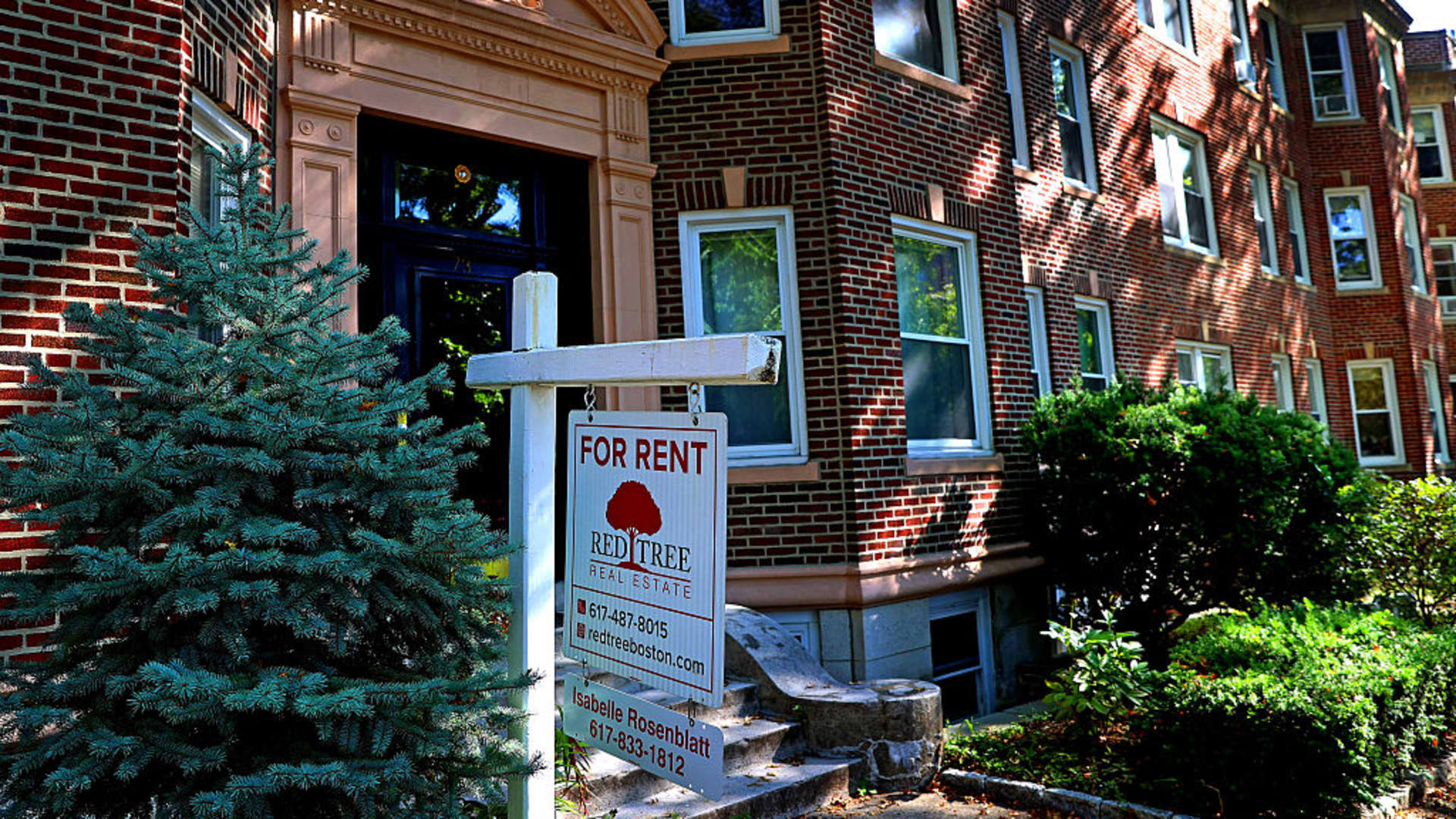
A “For Rent” sign in front of an apartment building on St. Paul Street in Brookline, MA, on September 12, 2025.
Boston Globe | Boston Globe | Getty Images
A version of this article first appeared in the CNBC Property Play newsletter with Diana Olick. Property Play covers new and evolving opportunities for the real estate investor, from individuals to venture capitalists, private equity funds, family offices, institutional investors and large public companies. Sign up to receive future editions, straight to your inbox.
A slew of new supply is still making its way through the multifamily housing market. That, coupled with weakening demand, especially from the youngest workers, is pushing vacancies up and rents down.
The national median rent for apartments fell 1% in November from October, and now stands at $1,367, according to Apartment List. It was the fourth consecutive month-over-month decline. Apartment rents are down 1.1% from November 2024 and have fallen 5.2% from their 2022 peak.
“Earlier this year, it appeared that annual growth was on track to flip positive for the first time since mid-2023; however, that rebound stalled out and reversed course during a particularly slow summer,” according to Apartment List researchers.
After hitting a record high for this index, which dates back to 2017, in October, the national multifamily vacancy rate remained at 7.2% in November.
The historic surge in multifamily construction over the past few years is now pulling back, but a good supply of new units is still coming online at a time of much weaker demand.
The fall historically sees the biggest slowdown in multifamily rents, but this year it’s even more pronounced. CoStar reported the biggest monthly drops in median rent it had seen in 15 years of tracking. The primary reason is that more young people are struggling to form new households.
“That 18- to 34-year-old group … I think it’s up to 32.5% of those now are living with family, and that’s the highest it’s been in a while,” said Grant Montgomery, CoStar’s national director of multifamily analytics. “I think it reflects high rental costs that have risen over the years, as well as the tougher job market for young folks just coming out of college.”
“That is where a lot of demand traditionally comes from, the core renter demand is from that sort of younger base,” he said.
The weakness is showing up in stocks of the major public apartment REITs. Names like AvalonBay, Equity Residential and Camden Property Trust are all down year to date.
Some markets are seeing rents drop faster than others, due to local economic factors. Las Vegas, for example, is experiencing slower tourism, which in turn hits jobs there. Boston has seen a decline in federal funding for biotech as well as a drop in foreign students for its colleges and universities; both are impacting its rental sector hard. Austin, Texas, is seeing the biggest hit to rents, thanks to still more construction of multifamily units.
While rents are softening nationally, and landlords are boosting concessions, renters are increasingly searching in more affordable markets.
Cincinnati was the market most searched for, followed by Atlanta and Kansas City, Missouri, according to a Yardi report that looked at where apartment hunters were active last summer, the traditionally busiest time for new leasing. St. Louis saw the biggest quarterly jump in tenant interest, and Washington, D.C., dropped from the top spot to No. 4.
“The Midwest, in particular, drew more attention than ever, signaling that many of its ‘hidden gem’ markets are no longer a secret,” according to the report, which found 11 of the top 30 cities for renter demand were in the Midwest.
Yardi also revised its expectations for 2026 supply, saying that while new supply will decline through 2027, a larger-than-expected under-construction pipeline caused it to increase its previous quarterly estimates for 2025 and 2026 by 6.8% and 2.5%, respectively.
As construction continues to slow into next year, the overall market should stabilize somewhat, according to the Apartment List report.
“That said, the supply boom still has a bit of runway remaining, and the demand outlook has begun to appear weaker amid a shaky labor market,” researchers wrote.