





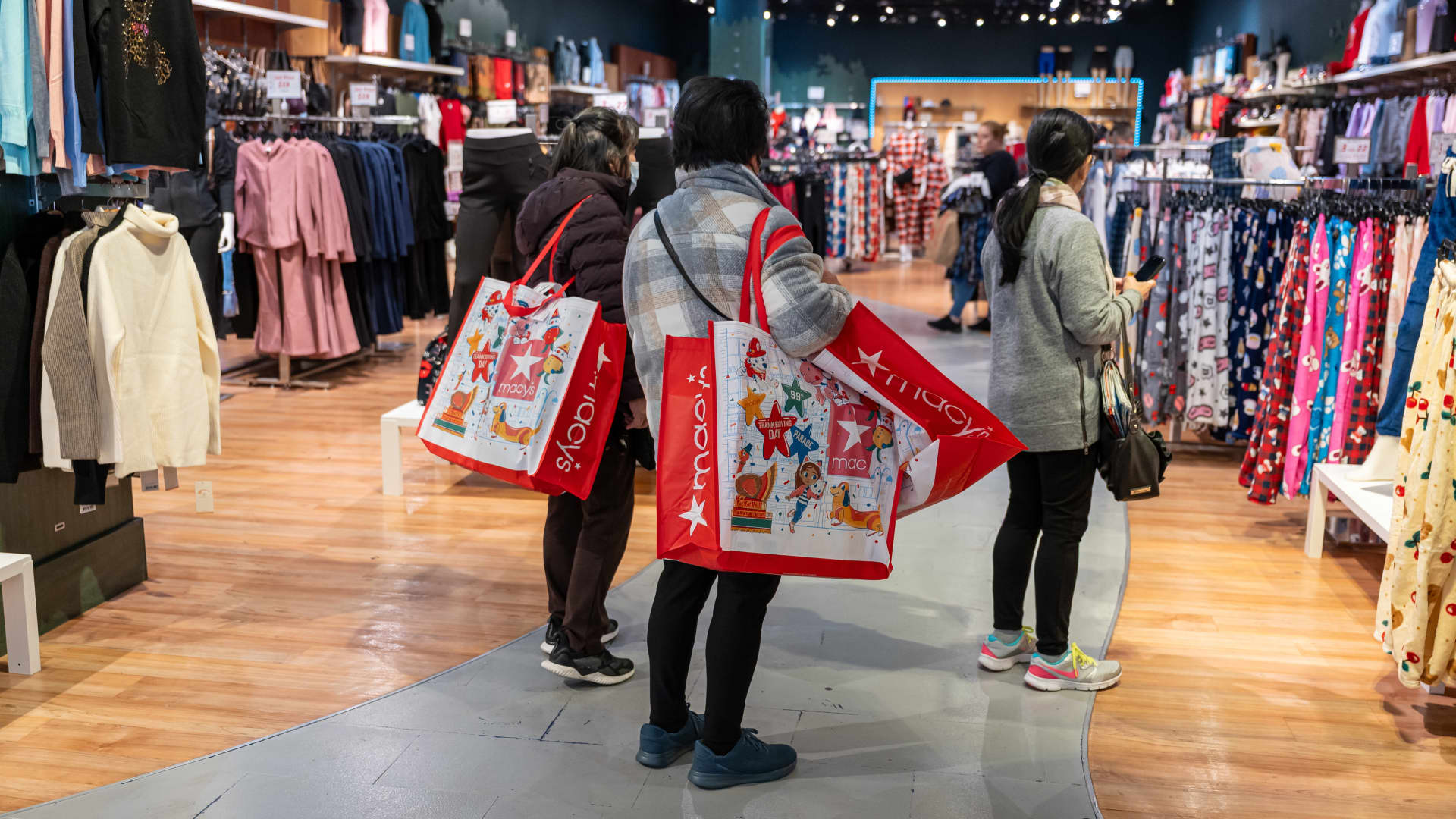
U.S. consumers shrugged off worries about the economy after their Thanksgiving dinners and went on a $23.6 billion three-day online shopping frenzy that exceeded analyst expectations, kicking off the holiday season.
Adobe Analytics said online spending on Monday was up 4.5% from last year $9.1 billion from midnight through 6:30 p.m. ET (2330 GMT). Adobe projected that before the end of Cyber Monday, consumers would spend between $13.9 billion and $14.2 billion online, which would bring online spending to roughly $43.7 billion for the five-day period including Thanksgiving.
Expectations were mixed heading into the holiday weekend due to weak consumer confidence and tariff-fueled inflation. Yet wealthy consumers spent freely, while others made room in tight budgets to buy presents for loved ones. Big discounts helped tempt buyers, and some Americans even took on short-term debt to buy gifts.
Adobe projected that Americans would spend upto 6.3% more online than last year’s Cyber Monday, traditionally the country’s biggest online shopping day.
Holiday shoppers “spent their wallets, not their psyches,” said Mark Mathews, chief economist with the National Retail Federation. Despite the recent U.S. government shutdown and weak consumer confidence, he said, other indicators like wage growth remain strong.
U.S. online spending on Black Friday hit a record $11.8 billion, according to Adobe, which tracks shopper visits to online retail websites.
But consumer unease is emerging in other ways.
Analysts at Kantar, who run shopper surveys and visit stores, said consumers made fewer impulse buys this year, while signs at brick-and-mortar stores like Walmart and Target contained language about discounts that was clearer and more specific and detailed than usual.
It reflects shoppers who were “on alert for being misled” about Black Friday deals, said Rachel Dalton, Kantar’s head of retail insights. She said big retailers like Amazon were running more discounts than usual on higher-priced items like tech gadgets, suggesting even wealthy consumers were growing more price-conscious.
More discounts
Some stores extended Black Friday discounts to items they normally would not, like household essentials, said Jack O’Leary, e-commerce thought leader at consumer intelligence firm NielsenIQ.
Amazon was running discounts on both higher-priced items like earbuds and computers, and essentials like batteries. “We have prices that are 30, 50, 60% off,” said J. Ofori Agboka, Amazon’s vice president of people experience and technology. “People can enjoy to their heart’s content.”
Early data suggests wealthier consumers spent more freely, said Marshal Cohen, chief retail advisor at consumer research firm Circana. Lower-income shoppers, who received government stimulus funding during the pandemic, have spent those funds, noted NRF’s Mathews.
Overall growth in online holiday spending has slowed since the pandemic. Adobe data show single-digit upticks each of the last five years, after double-digit growth each year between 2015 and 2020.
Buy now, pay later
As finances have tightened, short-term loan services like Affirm and Klarna have grown more popular.
CivicScience, a research firm that embeds consumer surveys in news and lifestyle websites, found that 38% of respondents used buy-now-pay-later (BNPL) services for at least one purchase over Black Friday weekend – the majority being young, lower-income shoppers.
Adobe’s data show that Black Friday BNPL use grew 9% from last year. For Cyber Monday, Adobe expects it to top the $1 billion mark, a 5% uptick over last year.
Consumers also made strong use of chatbots and other AI features to compare prices and secure discounts. AI-driven traffic to U.S. retail sites is expected to increase nearly eightfold from last year, Adobe said, when AI-driven shopping companions like Walmart’s Sparky or Amazon’s Rufus did not exist.
CivicScience found that 40% of survey respondents over the weekend used AI tools to help with purchases or shopping decisions. Among serious users – those who used it for multiple items – 87% were under age 45, CivicScience found.