



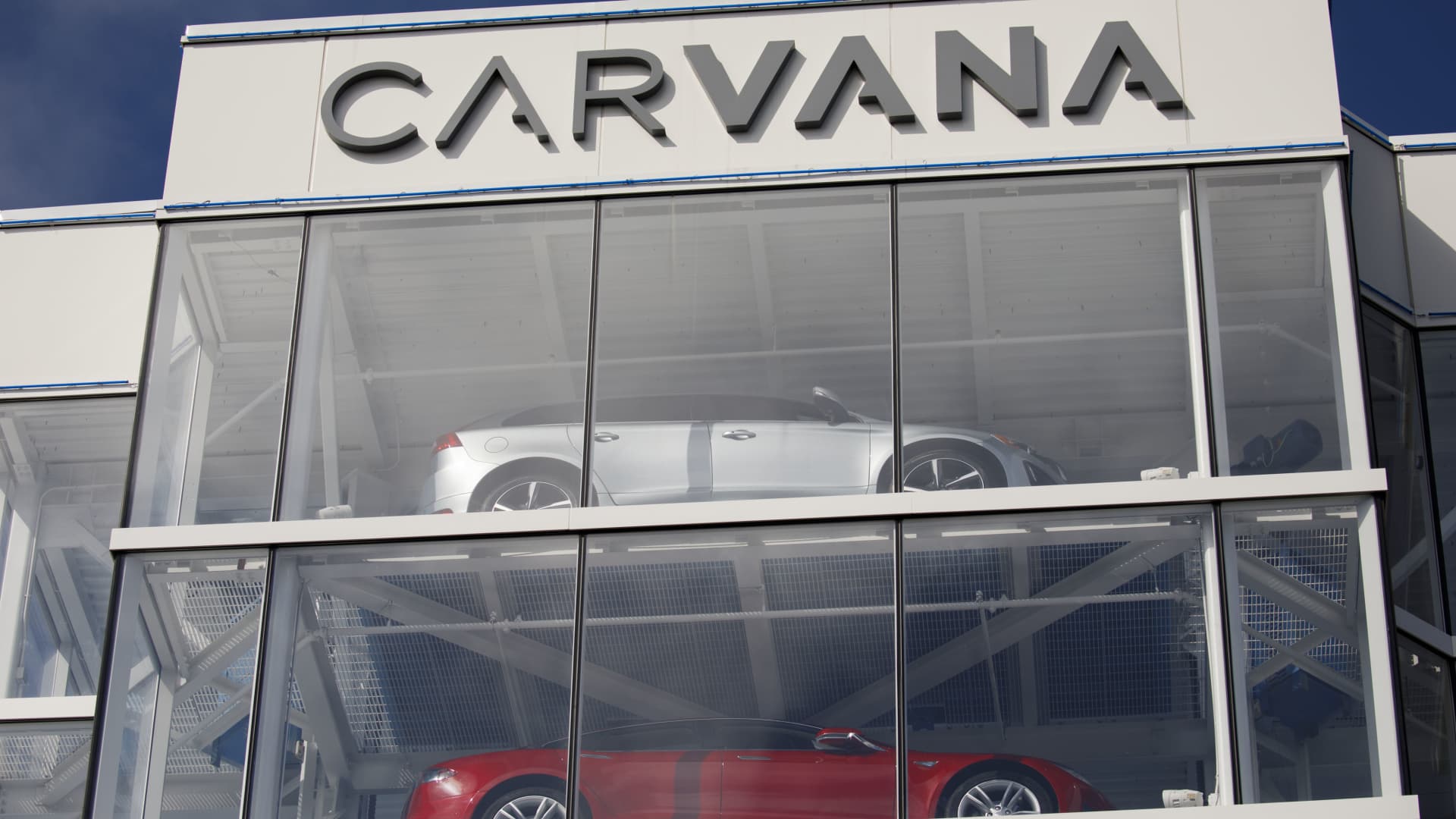
Carvana’s share price has staged a stunning comeback. The recent news that the company would be added to the S & P 500 propelled the enterprise value to more than $100 billion, a number that not only vastly exceeds those of large auto dealers like Penske , Lithia , AutoNation , Group 1 and Carmax but also those of legacy automakers. Carvana is now larger than Ford , GM , BMW, and Mercedes-Benz Group . But beneath the novel car vending machines and the story of tech-enabled disruption lies a far more traditional used-car dealership that serves as an engine for underwriting subprime auto loans. Carvana is not just an online used-car dealer. If it were, it’s unlikely it would be larger than Carmax, whose revenues over the past 12 months were actually 28% higher; it is, in effect, a vertically integrated lender and securitizer. A significant portion of its profits and cash flow depends on originating loans to weaker-credit customers and then selling those loans into asset-backed securities (ABS) markets. Fitch , when rating a recent receivables trust, noted that a weighted average FICO score of 701, arguably better than one might expect, but more than 95% of the loans in the pool had terms exceeding 61 months, and terms of more than 72 months formed almost 48% of the pool. In fairness, Carvana highlights this part of its business model. The company actively solicits car buyers who might not be able to get financing elsewhere, with promises that 99% of borrowers are approved. “All credit situations welcome. Get pre-qualified for an auto loan, even with bad credit, no credit or past bankruptcy.” The ability to finance buyers who might otherwise struggle to find financing helps margins in two ways. First, a buyer with few options cannot haggle as aggressively as a cash buyer, who can shop around for the lowest price and then, and only then, shop around for cheap financing if they want it, and won’t use it if the terms aren’t acceptable. Second, buyers with lower credit scores typically pay far higher rates, and the “vig” on those loans for Carvana is similarly much higher. It is especially problematic when subprime auto delinquencies across the market have already surpassed levels seen during the Global Financial Crisis. An astute reader is wondering how the monthly payments on these cars can be affordable for the buyers who avail themselves of them. Part of the answer lies in the terms of the loans offered. Carvana has originated loans with average terms of around 72 months in some securitized pools. As one might expect, this increases default risk and potentially the severity of losses when defaults occur, as the collateral’s value may have depreciated materially. Remember, these are loans on used cars. A 4-year-old used car would be 10 years old by the time a 72-month loan was finally repaid. The model also creates structural funding risk. Carvana depends on the ABS market and funding partners to buy or finance these loans. If spreads blow out, investor appetite fades, or a key partner pulls back, Carvana’s ability to convert originations into cash could be impaired—potentially forcing it to slow sales growth or hold more risky loans on its balance sheet. Carvana’s improved profitability in 2024–2025 sits atop a loan book and origination pipeline that are heavily exposed to lower-quality borrowers in a late-cycle credit environment. Finally, the equity valuation leaves little room for error. Carvana trades at nearly 64x the estimated 7.33/EPS the company is expected to earn in FY2026. I want to make clear that I’m actually quite impressed with Carvana’s recovery from near bankruptcy back in late 2022. The shares have increased by more than 12,500% since the lows of late December that year. I have also done business with the company personally – I sold a used vehicle to Carvana before we moved from Texas to California several years ago. It was a pleasant and seamless transaction. From my experience, I would suggest that Carvana is professional and well-run. But can it run from a downturn in the credit cycle? And even if it could successfully navigate a credit cycle downturn, would it continue to enjoy the enormous valuation premium it has over the rest of the industry? Shorting stocks is a challenging game, and I don’t recommend it. If you are fortunate enough to own Carvana shares, you likely have significant capital gains which, depending on how and where the shares are held, might incur a tax liability if they are sold. Instead, consider selling covered calls against your stock position. For example, the Jan. 23 weekly $500 strike calls were approximately $19 today, or 4% of the current stock price, and are roughly 7% out of the money. For a stock that has risen as much as Carvana has, capping one’s gains at ~11% over the next 6 weeks might not seem compelling, but a lot of good news is priced into this one already, and as good as this party has been, sometimes it’s best not to be the last one to leave. DISCLOSURES: None. All opinions expressed by the CNBC Pro contributors are solely their opinions and do not reflect the opinions of CNBC, NBC UNIVERSAL, their parent company or affiliates, and may have been previously disseminated by them on television, radio, internet or another medium. THE ABOVE CONTENT IS SUBJECT TO OUR TERMS AND CONDITIONS AND PRIVACY POLICY . THIS CONTENT IS PROVIDED FOR INFORMATIONAL PURPOSES ONLY AND DOES NOT CONSITUTE FINANCIAL, INVESTMENT, TAX OR LEGAL ADVICE OR A RECOMMENDATION TO BUY ANY SECURITY OR OTHER FINANCIAL ASSET. THE CONTENT IS GENERAL IN NATURE AND DOES NOT REFLECT ANY INDIVIDUAL’S UNIQUE PERSONAL CIRCUMSTANCES. THE ABOVE CONTENT MIGHT NOT BE SUITABLE FOR YOUR PARTICULAR CIRCUMSTANCES. BEFORE MAKING ANY FINANCIAL DECISIONS, YOU SHOULD STRONGLY CONSIDER SEEKING ADVICE FROM YOUR OWN FINANCIAL OR INVESTMENT ADVISOR. Click here for the full disclaimer.