



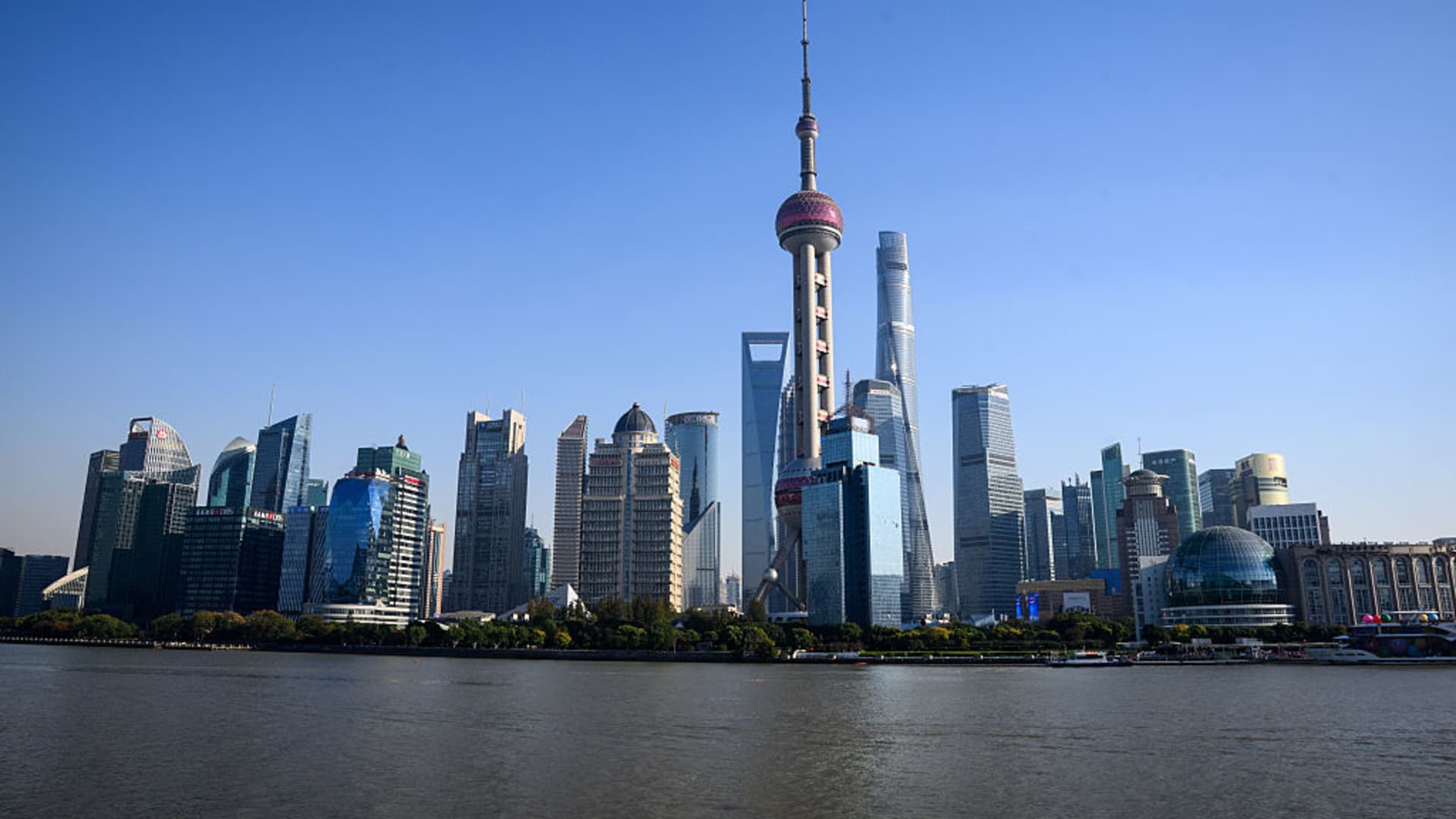
19 November 2025, China, Shanghai: Boats sail past downtown Shanghai on the Huangpu River. The tallest building on the skyline is the Shanghai Tower (rear).
Bernd von Jutrczenka | Picture Alliance | Getty Images
China’s retail sales growth and industrial production missed estimates in November while investment declined more than expected, data from National Bureau of Statistics showed Monday, indicating consumption remains a major worry.
Retail sales rose 1.3% last month from a year earlier, sharply missing Reuters’ median forecast for a 2.8% growth, and slowing from 2.9% rise in the prior month.
Industrial production climbed 4.8% in November from a year ago, edging down from 4.9% in the prior month and missing expectations for a 5% jump.
Investment in fixed assets, reported on a year-to-date basis, contracted 2.6% over the January through November period compared with a year earlier, sharper than the 2.3% drop estimated by economists. That decline deepened from the 1.7% in the January to October period, and was the sharpest slump seen since the pandemic outbreak in 2020, according to data going back to 1992 from Wind Information.
Economists at Golman Sachs in a preview last week estimated falling auto sales last month had dragged overall retail sales, coupled with the “negative distortion” effect from the earlier-than-usual start of the Singles-Day online shopping festival that pulled forward demand from November to October.
Data from China Automobile Dealers Association showed auto retail sales by volume in November declined for the first time in three years, dropping 8.1% from a year earlier to 2.23 million cars, as many local governments paused the trade-in subsidies.
Several online shopping sites extended their promotional period in a bid to jolt consumer spending, running from the first half of October through to Nov. 11, making it the longest Singles’ Day sales period ever. But still, sales performance disappointed as consumers tightened their purse strings, with gross merchandise volume growing just 12%, compared to 20% growth last year, according to data from Syntun.
Chinese policymakers have pledged further policy support to drive domestic demand and boost consumption and investment for next year.
China’s finance ministry said in a statement Saturday that it planned to issue ultra-long-term special government bonds next year to fund projects bolstering national security. The proceeds will also be directed toward equipment upgrades and consumer goods trade-in programs.
The ministry also pledged to boost its budget for investment to ease the slump in fixed-asset investment in recent months.
China’s economy appears to be on track to meet the official growth target of “around 5%,” largely thanks to a surge in exports to non-U.S. markets even as tariff tensions with Washington have weighed on shipments to the world’s largest consumer market.
China’s trade surplus surged to a record $1.1 trillion in November, breaking its full-year record of $992.2 billion in 2024, in just 11 months, drawing widespread concerns over its unbalanced trade and reliance on foreign demand.
International Monetary Fund Managing Director Kristalina Georgieva last week called on China to “accelerate” support for domestic consumption and shift away from relying on exports for growth.
Eswar Prasad, professor of economics at Cornell University and senior fellow at Brookings Institute, expressed concerns over the sustainability of China’s economic growth. In an opinion piece published on Sunday, the economist urged structural reforms to rebalance the economy, including measures to strengthen social safety net and bolster private enterprises.
“The government clearly wants to rebalance growth and understands what’s needed to bolster household consumption and raise productivity. Yet there is little sense of urgency and no clear timeline on concrete policy measures to accomplish these objectives,” Prasad noted.

Subscribe now
This is breaking news. Please refresh for updates.