




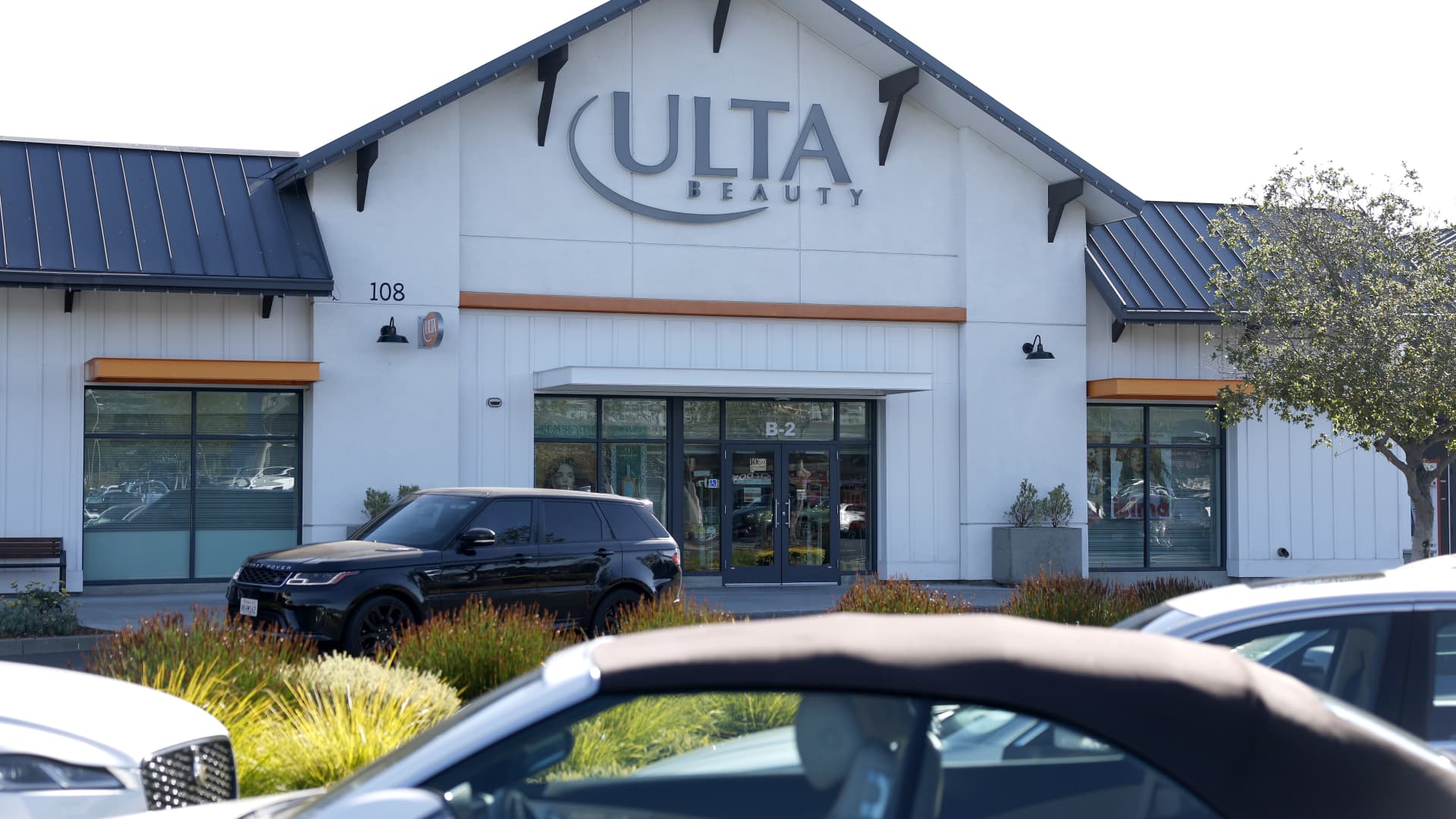
Omnichannel retailers, who use different venues to reach consumers, and a couple of beauty companies look to be the biggest beneficiaries of Black Friday spending this year, according to Wall Street analysts. Consumer spending during Black Friday this year hit a record, boosted by more promotions than were expected and artificial intelligence-aided shopping tools. U.S. shoppers spent a record $11.8 billion online on Friday, up 9.1% from 2024, according to Adobe Analytics. The average online selling price for goods in the U.S. was 8% higher this year compared to last, Reuters reported , citing Salesforce. Analysts are keeping a close eye on companies offering Black Friday promotional discounts, studying how higher prices and inflationary pressures are affecting consumer behavior this year. Canaccord Genuity analyst Susan Anderson believes this year could bode well for discretionary products, particularly beauty, as middle- to higher-income consumers continue to drive spending. Anderson noted a typical lull after Black Friday, but said in a Saturday note to clients that she’s cautiously optimistic as several key shopping periods are left this year. Bank of America analyst Lorraine Hutchinson, who pointed to high promotional activity in footwear and athletic goods this past weekend, said that consumers’ concentrated spending during key promotional periods could lead to a strong Black Friday, a pullback, and then a final push in runup to Christmas. “Significant uncertainty remains about the consumers’ ability to absorb these higher prices, but Santa always comes,” Hutchinson wrote. Black Friday winners Canaccord Genuity’s Anderson and Morgan Stanley analyst Alex Straton both highlighted Ulta Beauty as an early Black Friday leader. Anderson also said e.l.f. Beauty is seeing strong demand and in-store interest (Ulta carries e.l.f. products.) Ulta, whose shares are ahead 26% this year, outperforming the broader market, has grown this year even as higher tariffs have weighed on spending. Anderson and Straton noted solid foot traffic and moderate inventory levels, along with select promotions, as Ulta enters the spending holiday. “We note store checks at ULTA saw strong traffic throughout the weekend and was able to hold [promotions] flat YOY,” Anderson wrote. “We believe the one-stop shop for all things beauty can also benefit incrementally from increased focus and investment into wellness, which could see a boost in demand as consumers look to get an early start to New Years Resolutions.” Straton also highlighted solid traffic at Best Buy , driven by demand for computers and phones. She also named Gap -owned apparel chains Banana Republic and Old Navy, and Abercrombie and Fitch’s Hollister brand, as potential Black Friday leaders based on year-over-year line count increases, or the number of items purchased in a single shopping trip. Straton said robust demand during Black Friday led her to think that the holiday “could prove better-than-feared this year which, together with early cycle indicators, may mean now is the time to revisit softlines stocks” — sellers of clothing, footwear, accessories and home goods such as bedding. Shares of Gap are up 16% this year and have jumped 20% just in the past month. The San Francisco-based company saw fiscal third-quarter same-store sales grow by 5% , driven by rising revenue at its namesake brand after a viral campaign, the strongest growth for Gap since its fiscal 2017 holiday quarter. By contrast, Abercrombie shares have plunged 31% this year, but have climbed 42% in the past month in the wake of the company’s latest quarterly results . While Abercrombie sales suffered, Hollister brand sales saw rapid growth. Analysts also highlighted big-box, omnichannel retailers as strong performers, helped by discounts. Dana Telsey, CEO of Telsey Advisory Group and a specialist in retail, said faster fulfillment and targeted promotions in discretionary items helped attract consumers this year. Amazon , Costco , Target and Walmart were the major discounters that began promotions in October and intensified deals throughout November, she said. “In our view, the discounters were relative winners on Black Friday Weekend (and are expected to be for the entire season too), as consumers continue to favor one-stop, omnichannel retailers due to the combination of convenience, essentials, and value-focused discretionary items,” Telsey wrote in a Monday note to clients. Omnichannel refers to companies that integrate their shopping channels, such as online, mobile, in-store and curbside pickup services. Bank of America similarly noted stronger traffic at big U.S. retailers and said that Walmart, Target, Costco and BJ’s Wholesale Club appear well-positioned this holiday. In-store traffic at Walmart and Target appeared especially strong, helped by interest in electronics and toys, the bank said. Target was a notable winner of Black Friday so far, D.A. Davidson said, noting that the retailer drew significant store crowds. Target has struggled with stagnant sales for about four years, and recently reported a third-quarter sales decline .