






This report is from this week’s CNBC’s UK Exchange newsletter. Like what you see? You can subscribe here.
The dispatch
As expected, Chancellor Rachel Reeves used her Budget to pour a bucket-load of tax-raising measures over the U.K. economy.
One of them, though, will be of particular interest to Britain’s startup and scale-up businesses.
Reeves announced she was widening eligibility for the Enterprise Investment Scheme (EIS) and its sister scheme, Venture Capital Trusts (VCTs), “so scale-ups can attract the talent and the capital that they need.”
VCTs are publicly listed investment vehicles, run by fund managers, offering investors exposure to a portfolio of young, high-risk companies. To reflect the risk involved, the U.K. government offers generous incentives: investors may invest up to £200,000 ($263,975) each tax year, while dividends paid by VCTs are tax-free and gains are not subject to Capital Gains Tax.
In her speech, Reeves proudly proclaimed that she was supporting entrepreneurs, noting that half of new jobs in Britain are created by scale-ups.
She went on to say that this would involve “re-engineering our Enterprise Investment and Venture Capital Trust schemes so they don’t just back early-stage ideas — but stay with companies as they grow.”
Any entrepreneur hearing those words, in isolation, would have been delighted.
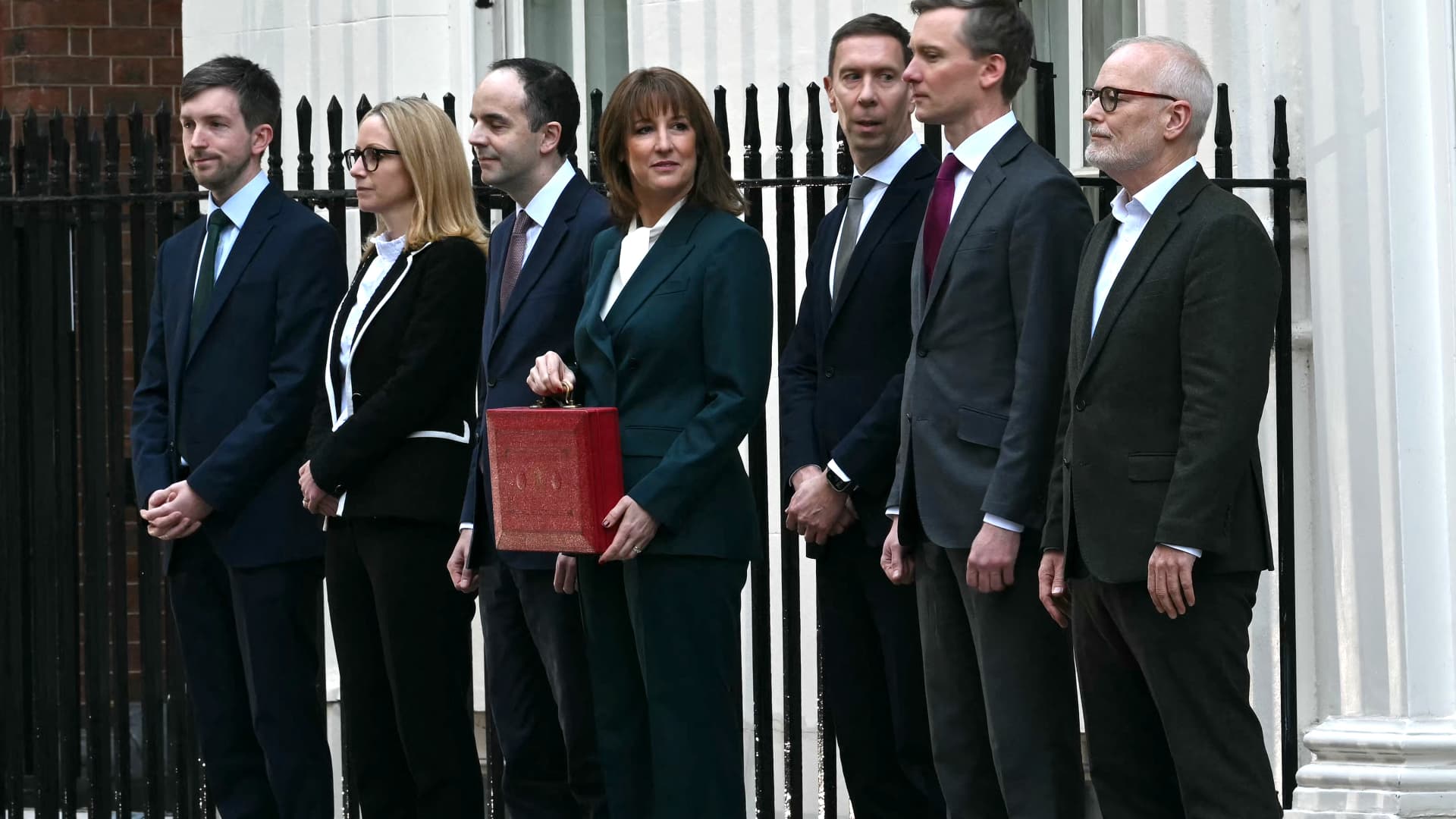
Britain’s Chancellor of the Exchequer Rachel Reeves (C) holds the red Budget Box as she poses with members of her Treasury team.
Justin Tallis | Afp | Getty Images
But the documents accompanying her speech revealed a blow to their potential investors. Currently, the government offers up-front 30% tax relief on investments in VCTs. So investing the maximum amount in any given tax year saves an investor £60,000 in taxes. The Budget documents revealed that, from the start of the next tax year, in April, that will fall from 30% to 20%.
The industry, it is fair to say, has been dismayed by the move.
Chris Lewis, chair of the Venture Capital Trust Association, called the decision “a change that risks undermining investor confidence at a critical time for U.K. scale-ups.”
He pointed to a 2023 survey, commissioned by HM Revenue & Customs, the U.K.’s tax authority, that showed tax relief was the single most important motivator for investors and that the number of VCT investors would probably fall if the incentives were reduced.
He added: “Reducing tax relief at the point of investment may unintentionally widen the funding gap these reforms aim to close by diminishing the VCT scheme’s attractiveness to investors. This could slow near-term fundraising and limit the flow of capital to innovative U.K. SMEs.”
Unfortunately, there is a precedent for this.
A ‘Black Friday rush’
Alex Davies, chief executive of the investment platform Wealth Club, said that in 2006-07, when up-front tax relief was cut from 40% to 30%, the amount raised by VCTs fell 65% and took more than a decade to recover to previous levels. He said this year’s announced cut had sparked a “Black Friday rush” before the relief cut for the top VCT managers, with his platform seeing a 538% rise in applications the day after the Budget.
Others were less polite.
Peter Hicks, research analyst at the investment firm Chelsea Financial Services, told Trustnet, the investment research and data platform, that the move was “utterly nonsensical,” adding: “Rachel Reeves is performing impressive mental gymnastics to badge this as a ‘pro-growth’ Budget while simultaneously draining the lifeblood from the very companies that drive growth.”
And Kallum Pickering, chief economist at the investment bank Peel Hunt, called it a “stupid change.”
The Treasury’s justification is that it plans to raise VCT and EIS limits to allow investors to follow-on as companies grow beyond the startup phase and to incentivise funds to support high-growth companies.
What that means in practice is that companies qualifying for an EIS or inclusion in the portfolio of a VCT will be able to raise more money than they could previously, significantly so in some cases, particularly those that the Treasury calls “knowledge intensive companies.”
Previously, VCT investee companies could receive an annual maximum of £5 million worth of investment and a lifetime maximum of £12 million (£12 million and £20 million for knowledge intensive companies), but these limits will now rise to £10 million and £24 million (£20 million and £40 million for knowledge intensive companies).
There will also be a tweak to the qualifying rules that will allow more established businesses to be included.
In fairness to the Treasury, the industry campaigned before the Budget for increases in the limits, arguing that they had been eroded by inflation since they were last changed in 2016.
Handily for a cash-strapped government, slashing the up-front tax relief on VCTs will save money. The Treasury expects to be £125 million better off in 2027-28 as a result of this measure and by £95 million in each of the subsequent two tax years — more than making up for the cost of extending the scheme limits.
The worry is that VCTs already appear to be becoming less popular. According to the latest Treasury statistics, VCTs issued £873 million worth of shares in the 2023-24 tax year, down 17% on the previous year, while VCT investors claimed tax relief on £810 million worth of investment, down 19% on the previous year. The number of individual investors claiming tax relief fell by 9% to 24,085.
The Treasury will argue that, by increasing annual and lifetime investment limits, it is paving the way for more capital to be directed towards startups and scale-ups. The danger is that, in cutting up-front tax relief, it is deterring the very investors who would have supplied that capital.
Top TV picks on CNBC


Megan Greene, external member of the Monetary Policy Committee at the Bank of England discusses the inflation outlook, the impact of the Autumn Budget on monetary policy and her forecast for U.K. economic growth.

IIF CEO Tim Adams says Chancellor Rachel Reeves was dealt a bad hand in the run up to her budget, as Reeves faces accusations of lying about the state of the country’s finances.

OBR Budget Responsibility Committee member David Miles says U.K. productivity hasn’t recovered from Covid and energy price shocks, driving a downgrade to the growth outlook.
— Holly Ellyatt
Need to know
Quote of the week
In the markets
London-listed stocks have moved slightly higher over the past week, taking the FTSE 100 closer to passing the 10,000-point milestone. If the index reaches that threshold before the year is out, it would be the fastest it has ever moved between 1,000-point increments.


The performance of the Financial Times Stock Exchange 100 Index over the past year.
U.K. banking stocks — including Metro Bank and Lloyds Banking Group — posted gains on Tuesday, after the Bank of England trimmed its estimate of how much capital banks operating in the U.K. need as a buffer. The central bank also said all of the U.K.’s major banks had passed its stress tests, which simulate economic shocks and their potential impact on lenders.
It’s been a dramatic week for U.K. bond markets, with government borrowing costs seesawing after the Office for Budget Responsibility accidentally leaked information on the Autumn Budget shortly before it was delivered in parliament. The error — labelled “deeply disappointing” by Rachel Reeves — culminated in OBR Chief Richard Hughes’ resignation on Monday. The yield on the benchmark 10-year gilt added around 2 basis points on Tuesday.
The British pound was little changed against both the U.S. dollar and the euro on Tuesday, but gained around 0.3% versus the greenback in the week to Dec. 2.
— Chloe Taylor