





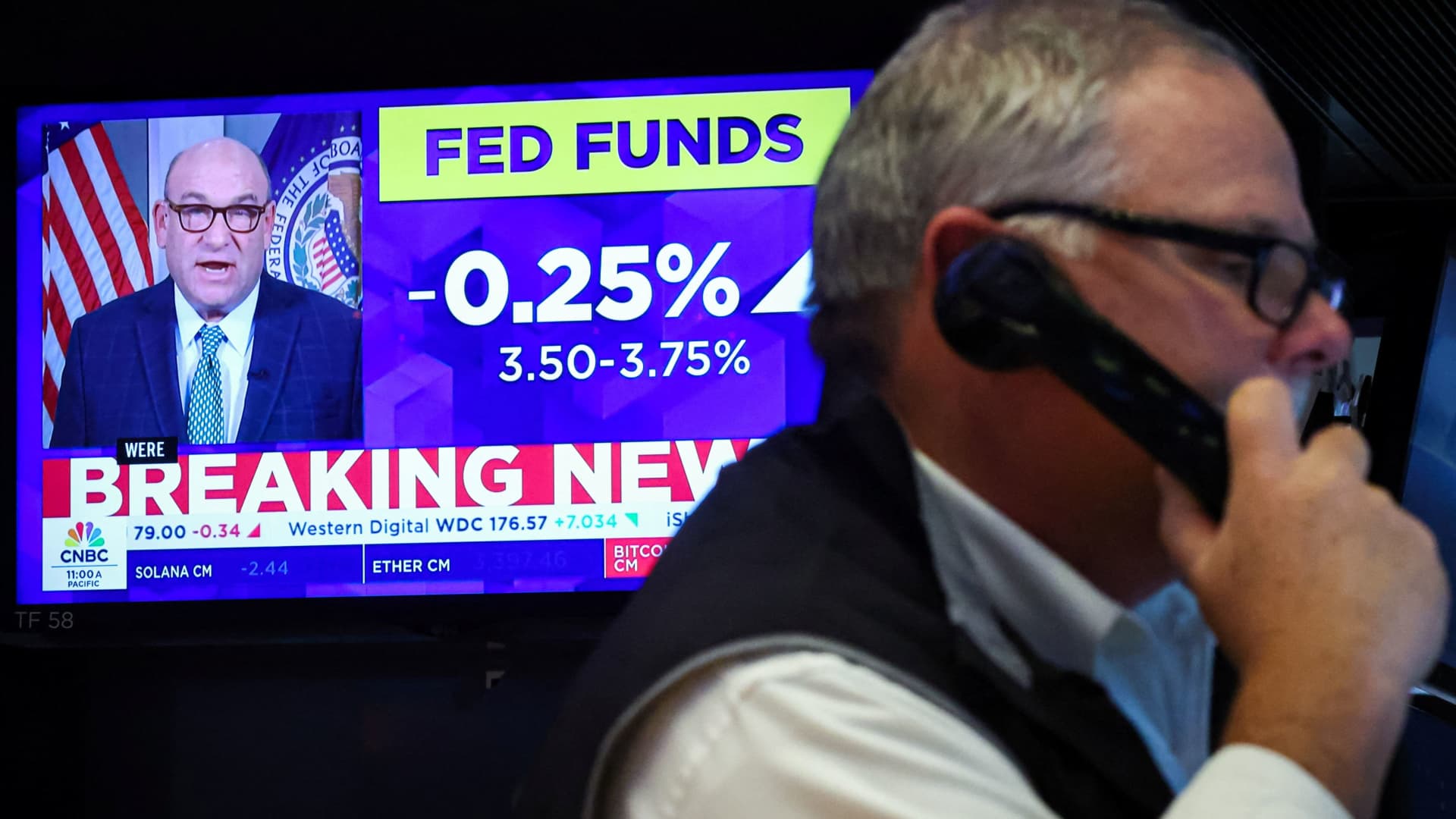
As central banks make different decisions on rates this week and next, their economies all show one thing, according to Deutsche Bank: Global reflation is back. “Something’s cooking. In contrast to US rates, the rest of the world looks far more interesting,” George Saravelos, global head of FX Research at Deutsche Bank, said in a note issued ahead of the announcement. Reflation means an attempt to lift the economy after weak growth, typically by lowering rates, buying government bonds, and cutting taxes to encourage spending. A “sharp re-pricing was underway” in Australia, Saravelos said, as the market now expects a rate hike by the Reserve Bank of Australia when it meets in February, having kept rates at 3.6% on Tuesday. “But it’s not just Australia, interest rate expectations in many economies outside of the US have surged in recent months,” Saravelos said, noting that U.S. 10-year treasury yields are unchanged compared with Korea, Sweden, and Japan, among others, which have seen a 30 to 50bps sell-off. “There is a common denominator in all these countries: fiscal policy is easy, house prices are starting to accelerate again, and central banks are not willing to accept any more currency weakness. Put simply, global reflation is back,” he added. The Fed approved a highly-anticipated 25 basis point cut on Wednesday. The U.S. central bank trimmed the Federal Funds to 3.5%-3.75% but signaled a tougher road ahead for further reductions. It will also start buying again on Friday , targeting $40 billion of short-term bills as part of a monthly program to stabilize markets. Switzerland’s central bank left rates unchanged at 0% on Thursday, while the European Central Bank and Bank of England are set to meet next week. The Bank of Japan meets on Dec. 19, when it is expected to raise its key policy rate. This is arguably “more important” than the Fed’s decision, according to Gautam Samarth, fund manager at M & G Investments, told CNBC. “We might be seeing a regime change in Japan right now,” Samarth told CNBC’s “Europe Early Edition” on Wednesday. “Inflation has been problematic,” he said, given recent rises after decades of a low-rate environment , though the government is taking action with new stimulus programs. “So we’ve still got deeply negative interest rates, and the bond markets have reacted in a weird way. So in terms of the path to normalization and getting to a more neutral interest rate stance, and its knock on effects and asset pricing, I think Japan is very, very interesting,” Samarth added. Inflation in Europe, meanwhile, is just above the target of 2%, which explains why so many expect the European Central Bank to take a neutral stance. Deutsche Bank’s Saravelos pointed to European equities “at record highs” and the Euro-area PMI data being “consistent with annualized GDP growth of around 1.5%” as signs that the bloc’s growth has picked up. “This is already higher than consensus expectations for next year, even before the German fiscal stimulus has kicked in and with private saving rates at the highs,” he said, but added that “they have plenty of potential to come down, especially in the event of a Russia–Ukraine peace deal.” “We’ve been espousing a bullish view on Eastern European and Scandinavian currencies as the preferred way of expressing the bullish European reflation story in recent weeks,” Saravelos added. Asian currencies are also “deeply under-valued,” but getting them “moving a bit more” would help boost global sentiment and the Euro-Dollar exchange, he said. Read more Here are the five big takeaways from Wednesday’s Fed rate decision Swiss central bank holds interest rate at 0% as inflation cools; European markets dip Use 2026 dips ‘opportunistically’ to get into mega trends at more attractive valuations: Strategist Stateside, the markets are pricing in two rate cuts by September next year. “So long as The Fed delivers only two Fed cuts by September next year, you’re not going to have a meaningful impact on the exchange rate to result in any more imported disinflation,” Andrzej Szczepaniak, senior European economist at Nomura, told CNBC’s “Europe Early Edition” on Thursday. “The ECB would need to cut rates further to react against that, I think this important caveat that all that’s already in the price action,” he added. While the ECB tends to follow the Fed, Szczepaniak noted that there is history of banks diverging “if the macro cycles warranted it.” The Fed raised rates in most of 2016-2017, while the ECB was largely unchanged over that period.