





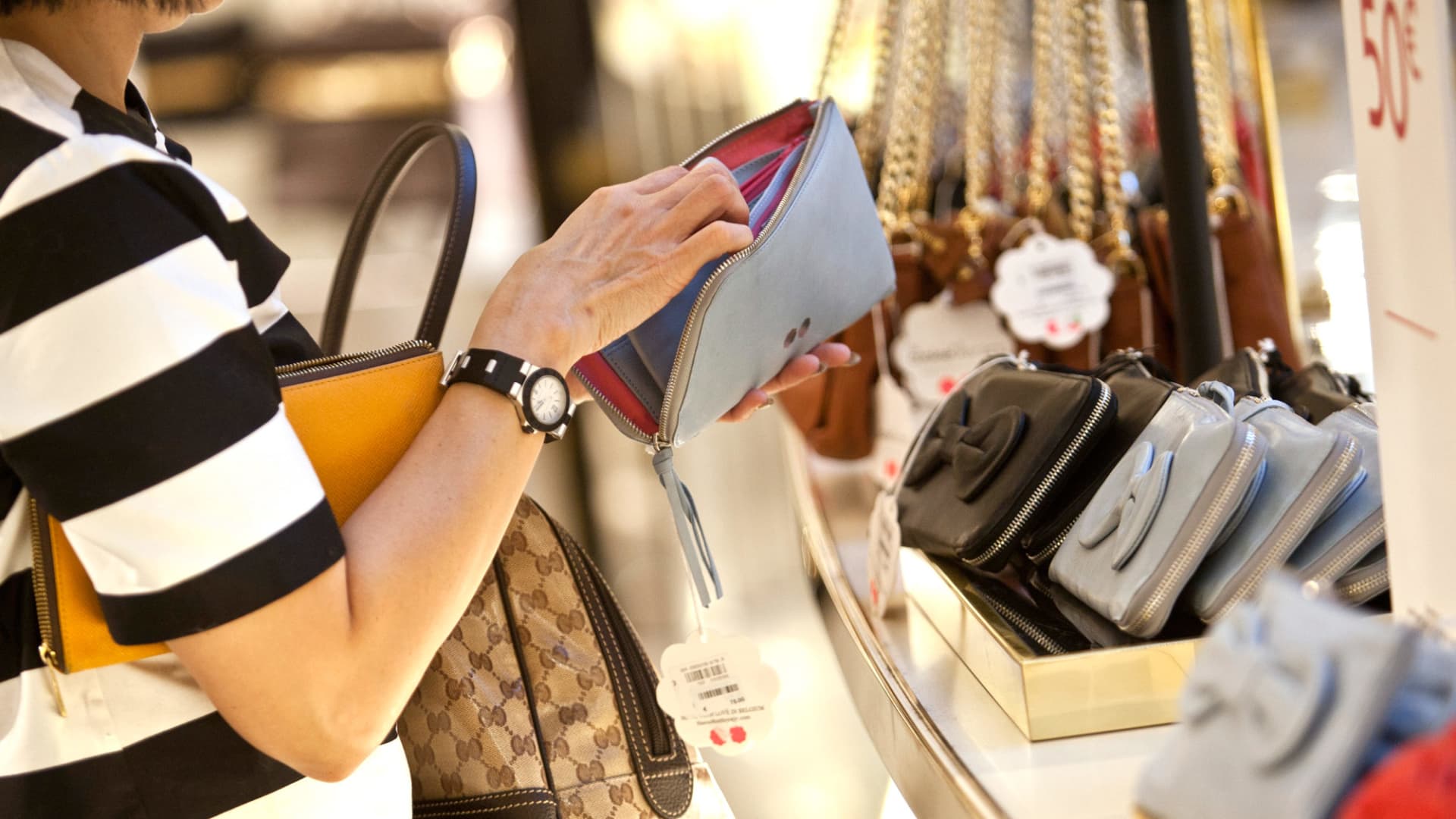
For the first time in years, analysts are feeling optimistic about luxury. Next year, the sector will finally return to growth, market watchers say, yet companies’ performance is likely to diverge based on their level of exposure to different segments of the customer base, making stock picking key for luxury investors in 2026. J.P. Morgan predicts the sector will stabilize in 2026 following a tough 2024 and volatile 2025, with improvements driven by an uptick in Chinese consumer confidence and product innovation. Luxury groups have been contending with notable sales declines over the past two years. Following a post-pandemic boom, companies struggled to gain momentum as consumers held off spending amid higher costs of living and worries about job security. Despite popular belief, the luxury sector isn’t all about the ultra-wealthy shoppers residing in London’s Mayfair or walking down New York’s Fifth Avenue. So-called aspirational luxury shoppers, consumers who can afford some entry-level luxury items but are not part of the ultra-rich demographic, are just as important. “High-end jewelry, watches – the hard luxury, the ultra-luxury – is doing well, but the middle has fallen off, and the bottom is falling out,” founder of 5 New Digital Michael Zakkour, told CNBC’s “Squawk Box” on Friday. “The aspirational luxury buyer has virtually disappeared.” ‘Soft luxury’ like leather goods, handbags and clothing is in a tough spot, said Zakkour, “because the aspirational luxury buyer who might be saving for a long time to buy a $3,000 handbag, they’re just not doing it anymore.” Polarized performance J.P. Morgan analysts predict that heightened macro volatility as well as low visibility on the wealth effect – the idea that people spend more when they feel wealthier due to an increase in the value of assets like property or equities – will lead to a polarization of performance. The analysts’ top choice is Richemont , seeing strong momentum for its brands Cartier and Van Cleef. They also like Moncler , Ferragamo , LVMH and Prada . Like J.P. Morgan, UBS analysts are similarly hopeful that the worst is over for luxury and predict the sector will see about 5% organic sales growth across their coverage next year. That should be enough to drive an uptick in profitability after two years of margin pressures, they noted in analysis last week. UBS is cautiously optimistic about soft luxury names and expects an uptick for them in 2026 but still foresees a continued outperformance of jewelry which typically relies on a more affluent customer base. A point of disagreement is Burberry , the British brand recognizable by its distinct check-patterned scarves and clothing. While UBS likes Burberry as “a key turnaround story for now” and gives it a buy rating, J.P. Morgan downgraded the stock to underweight last Friday. Consensus is too optimistic about the improvements expected at Burberry next year, J.P. Morgan said in analysis Friday. “Burberry has shown a stabilization of its sales densities in the last 12 months; however, we think execution risk becomes higher from here, now that some of the easy fixes (e.g. reinforcing scarves and outerwear, improving marketing campaigns and brand messaging) have been implemented.” Risks remain The wealth effect is currently supporting strong U.S. demand, however, it goes both ways. Hence, demand could be at risk if the stock market corrects. Given recent market jitters about high valuations and an AI bubble , that risk has become even more pronounced. China is another pressure point. While the country’s consumers have shown signs of recovery, especially in the most recent earnings cycle , many say it is too early to talk about a full rebound. Chiara Battistini, J.P. Morgan’s head of European luxury, told CNBC in November that it is “early to call it a turnaround and a complete inflection,” and that the improvement came against an easy comparison base. Macro pressures in China could also cause the recovery to be a bumpy one. Coming into 2026, companies are focusing on innovating their product lines, potentially leading to a more competitive fashion arena. It could also begin to adress luxury’s “consumer fatigue,” whereby customers face a growing weariness from brands’ aggressive pricing post-pandemic, without any perceived quality improvement.