






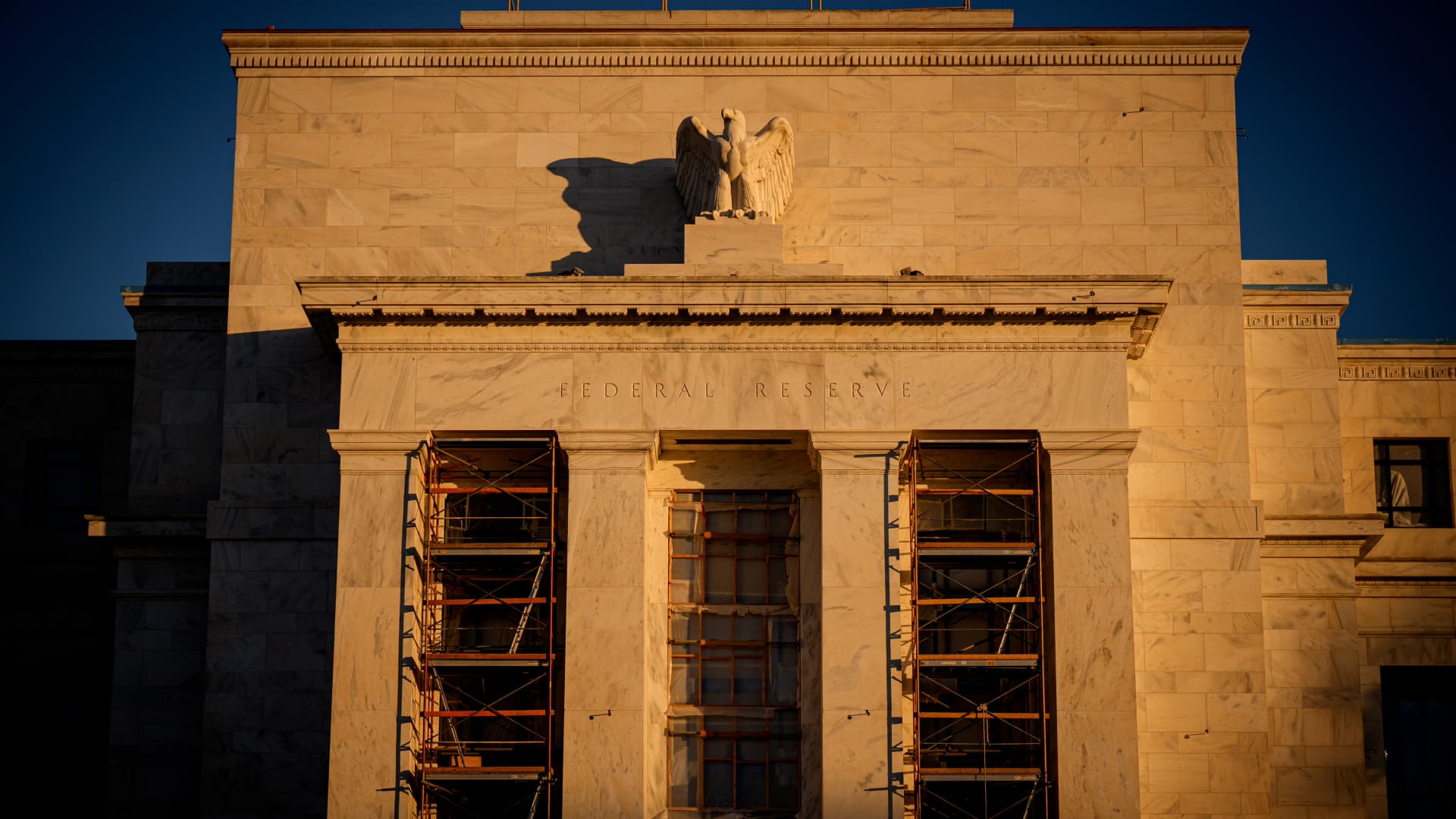
Renovation work continues on the Marriner S. Eccles Federal Reserve Board Building, the main offices of the Board of Governors of the Federal Reserve System on December 9, 2025 in Washington, DC.
Andrew Harnik | Getty Images News | Getty Images
The Federal Reserve on Thursday reappointed 11 of its 12 regional bank presidents, ending a mini-drama at the central bank in a move that came a bit earlier than usual.
By unanimous vote, the seven governors kept in place a cast of officials that also includes first vice presidents at the branches that extend across the country. The group of presidents did not include the Atlanta Fed, whose president, Raphael Bostic, is retiring in February.
Though the regional reserve banks act independently and hire their own presidents, the moves are subject to board approval in Washington, D.C. The presidents serve five-year terms, which in this case will commence March 1, 2026, and can be removed at will by the board.
Normally, the Fed waits until closer to the Feb. 28 expiration date of the terms to announce reappointments. The terms historically have ended in years ending in one or six.
There had been some speculation about whether President Donald Trump, a fierce Fed critic, would seek to exert more control over the rate-setting process by removing some regional presidents. The Federal Open Market Committee sets the central bank’s key interest rate with a voting group that includes the chair, the other six governors, the New York Fed president and a rotating cast of four other regional presidents.
However, the unanimous vote included Governor Stephen Miran, a recent Trump appointee whose term expires in January.
Moreover, Treasury Secretary Scott Bessent recently complained that New York holds disproportionate sway over the Fed as several presidents are from the city but serving in other areas. They include Lorie Logan, who previously ran the trading desk at the New York Fed and now helms the Dallas distrct, and former Goldman Sachs executive Beth Hammack, who is in Cleveland.
Bessent floated a proposal in which regional presidents would be required to be residents of their district for three years.